
Every sales team has an opinion about when to call. Some swear by early mornings before prospects get busy. Others wait until after lunch. A few insist Fridays are a lost cause and Mondays are worse.
Teams are making thousands of calls on WAVV every single day. We pulled a year of connection data and looked at 85.3 million dials, broken out by day of week and hour of day, to see which of the common opinions hold up. Here's what the numbers actually show.
Understanding the Baseline Data
Because this study analyzes a massive, aggregate platform dataset of over 85 million dials, these numbers represent a blended baseline of all outbound activity. This includes cold outreach, aged lists, and mixed-quality lead sources across dozens of industries.
Depending on your specific strategy, your absolute baseline numbers will vary wildly. For instance, warm opt-in leads or niche B2B lists routinely see vastly higher absolute connect and conversation rates than broad, cold data. However, the macro-level human behavior patterns remain similar across categories.
Weekdays Beat Weekends, No Contest
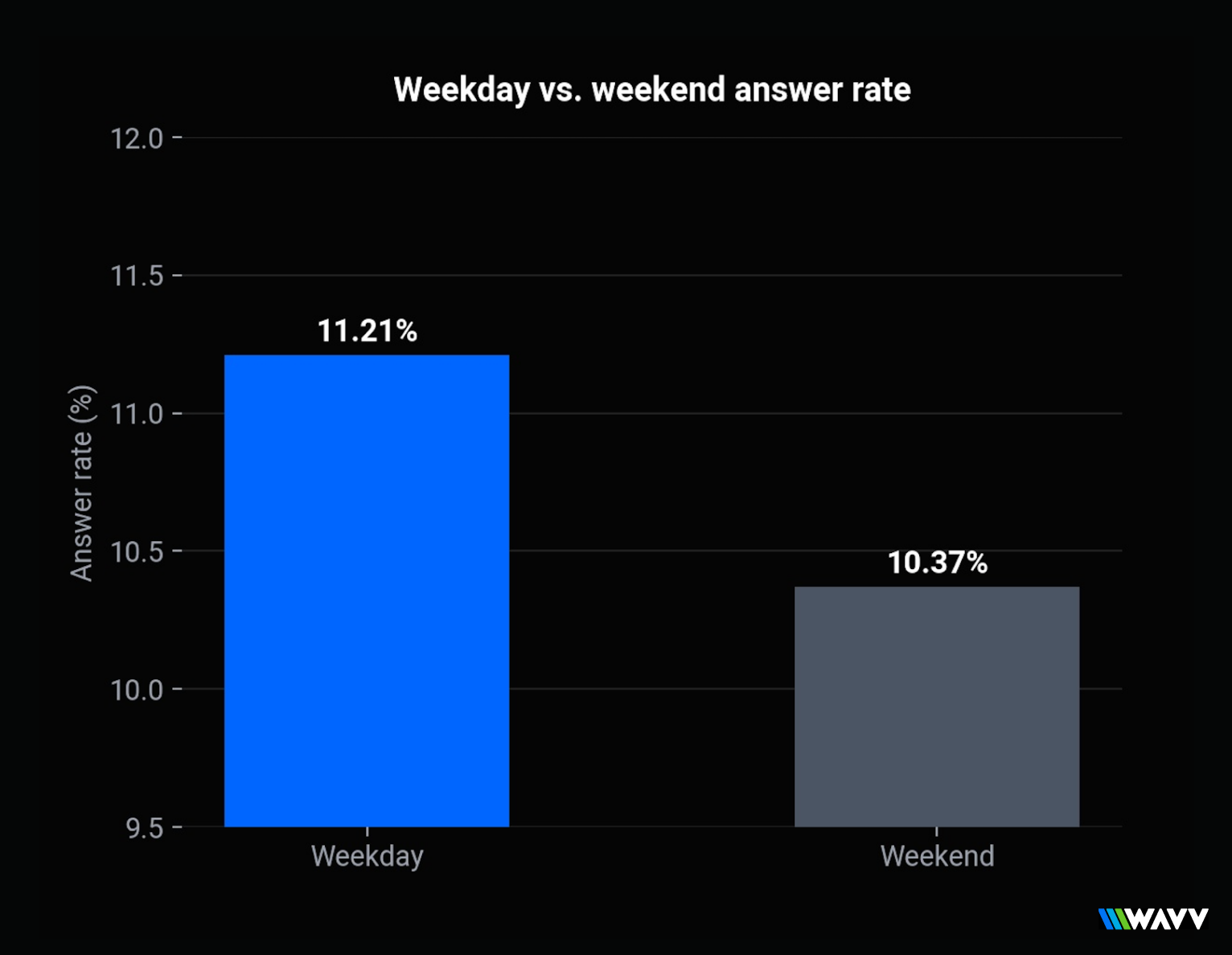
Across the year, weekday calls answered at 11.21% and turned into a real conversation 0.95% of the time. Weekend calls trailed on both counts — a 10.37% answer rate and a 0.86% conversation rate. That's roughly a 9-10% relative drop in performance from calling on a Saturday or Sunday instead of a weekday.
Sunday is the weakest day of the week on every measure, and unsurprisingly the lowest volume, since most teams already know not to call much on Sundays.
Monday Might Actually Be the Best Day to Call, Not the Worst
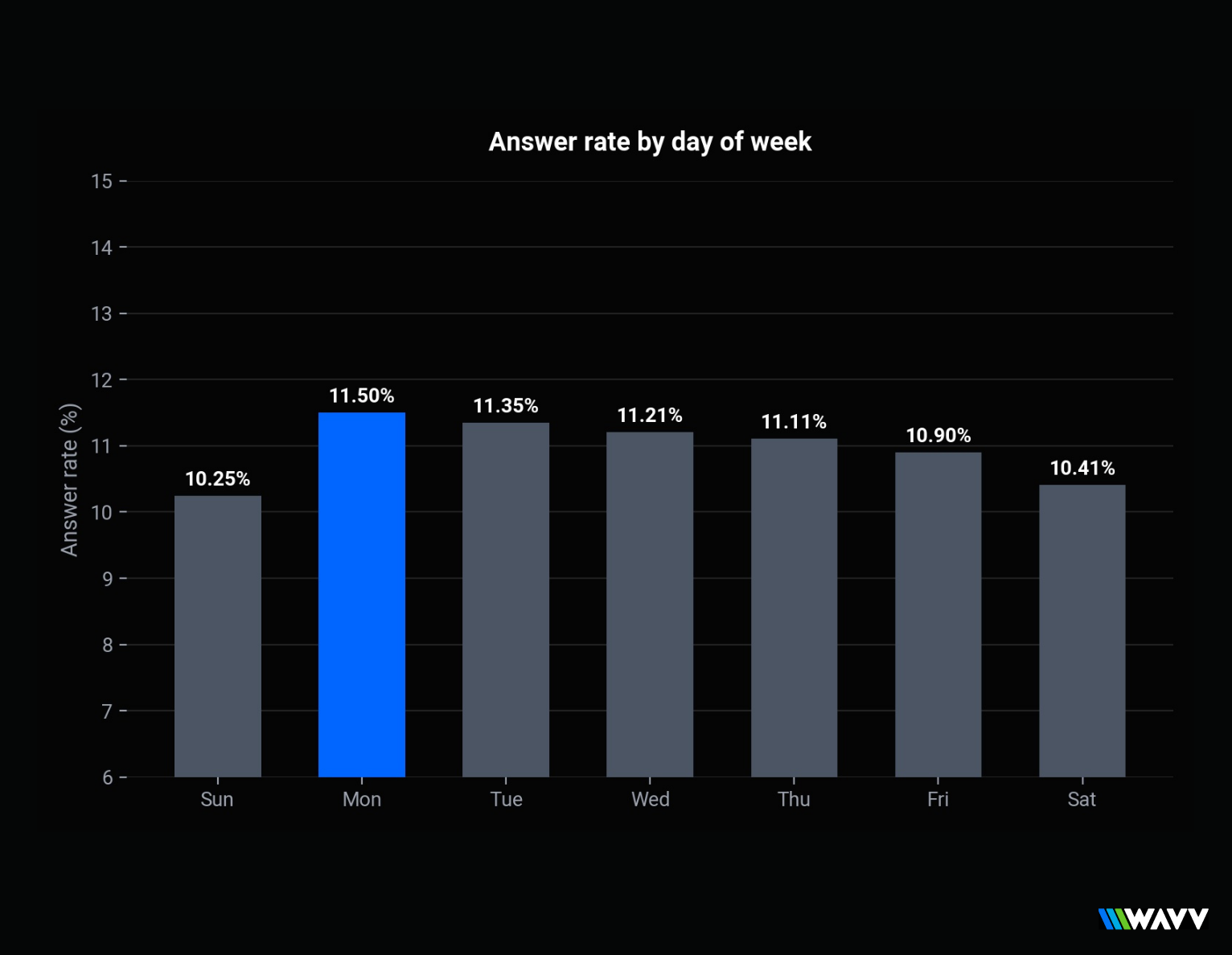
This one surprises people. The "never call on Monday, everyone's slammed" advice doesn't show up in the data. Monday leads every single day on both answer rate (11.50%) and conversation rate (1.01%), even though it also carries a heavy call volume.
In fact, Monday delivers a 14.7% relative lift in conversation rates compared to Friday. Performance then declines gradually as the week goes on.
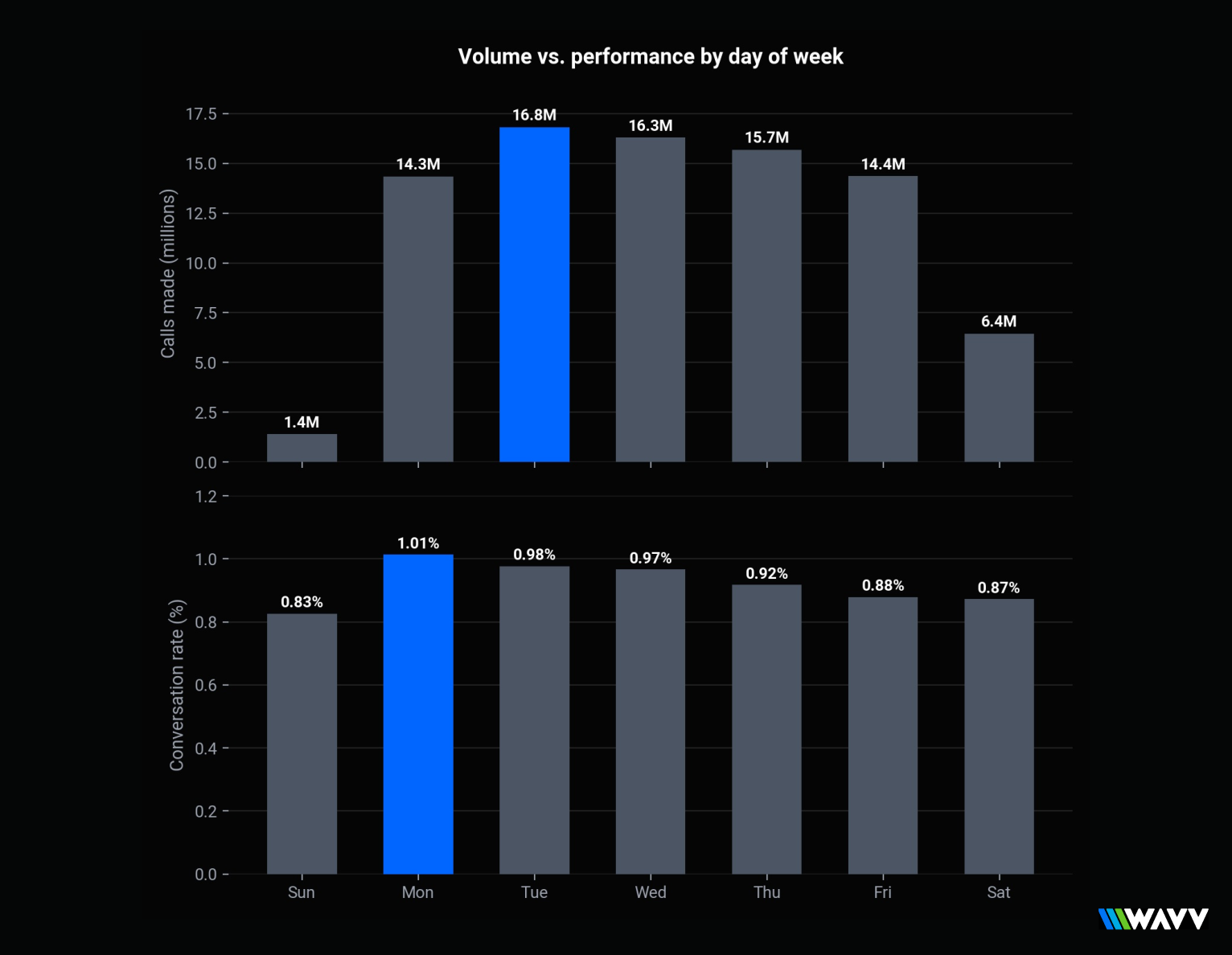
To better understand the true productivity of your call blocks, it helps to look at the Answer-to-Conversation Rate the percentage of people who actually had a qualifying conversation once they picked up the phone:
| Day | Answer Rate (Per Dial) | Conversation Rate (Per Dial) | Answer-to-Conversation Rate |
|---|---|---|---|
| Monday | 11.50% | 1.01% | 8.78% (Nearly 1 in 11 pickups) |
| Tuesday | 11.35% | 0.98% | 8.63% |
| Wednesday | 11.21% | 0.97% | 8.65% |
| Thursday | 11.11% | 0.92% | 8.28% |
| Friday | 10.90% | 0.88% | 8.07% |
| Saturday | 10.41% | 0.87% | 8.36% |
| Sunday | 10.25% | 0.83% | 8.10% |
By Friday, the conversation rate per dial has dropped significantly relative to Monday. If your team treats Friday afternoon like a wind-down day, the data agrees, people are measurably harder to reach and less willing to talk.
The Sweet Spot is Late Morning Through Mid-Afternoon
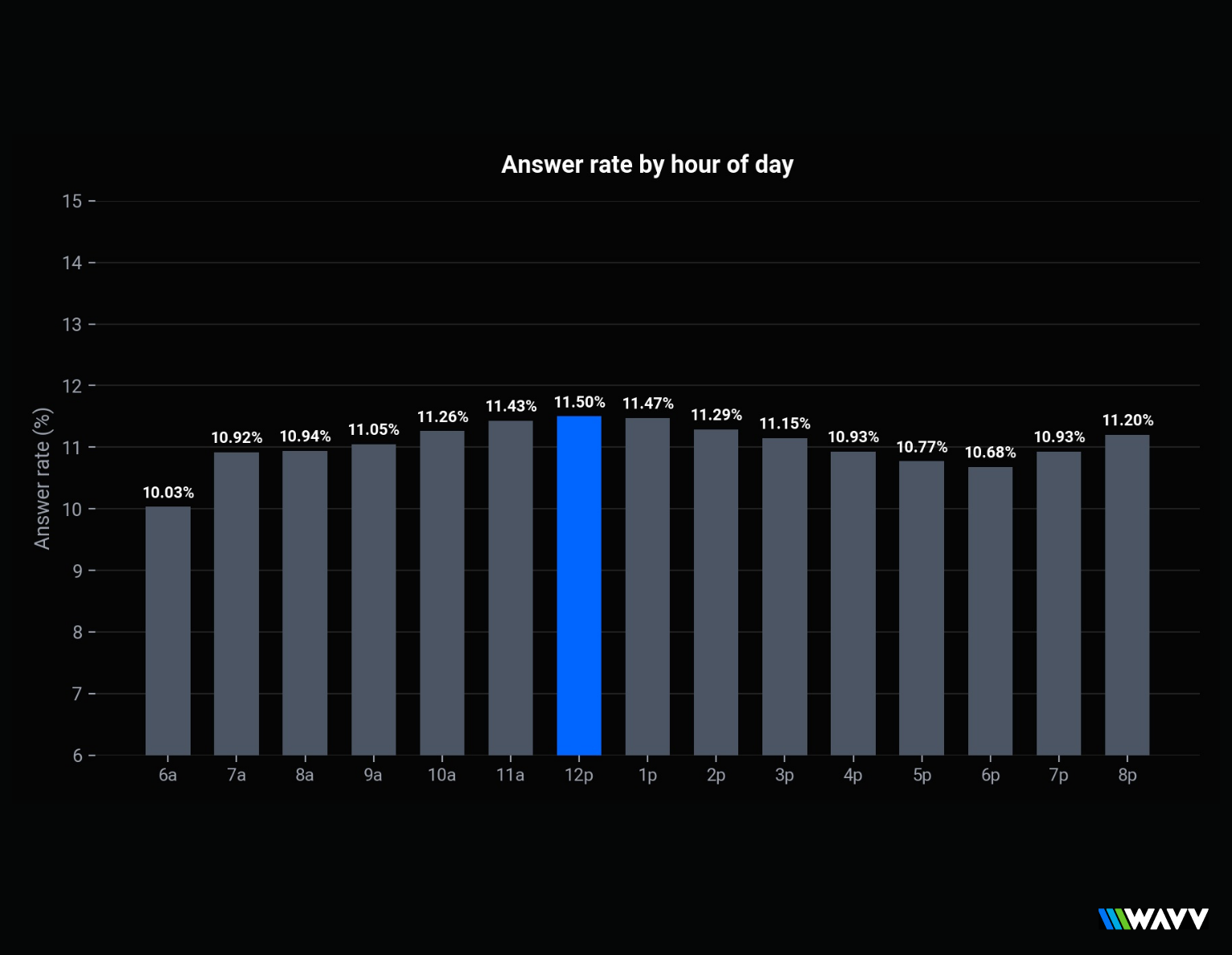
Looking at hour of day across high-volume windows, performance builds steadily from the early morning, peaks around midday, and holds through mid-afternoon before tapering into the evening commute hours.
- Weakest window: early morning, 6-9am (0.88% conversation rate) — this is the worst-performing block of the entire business day.
- Building: late morning, 9am-noon (0.94%)
- Best sustained window: midday to mid-afternoon, roughly 11am-4pm (0.95-0.98%), with the single best high-volume hours being 1pm and 3pm.
- Fading: early evening, 5-7pm (0.93%) as people shift into commute/family mode.
The top individual day-hour combinations, all backed by well over a million calls, cluster almost entirely in this midday sweet spot. When a prospect answers during these peak hours, they are significantly more likely to engage in a full conversation:
| Day & Time | Answer Rate (Per Dial) | Conversation Rate (Per Dial) | Answer-to-Conversation Rate |
|---|---|---|---|
| Monday, 3pm | 11.48% | 1.06% | 9.23% (Nearly 1 in 10 pickups) |
| Monday, 1pm | 11.82% | 1.05% | 8.88% |
| Tuesday, 1pm | 11.74% | 1.03% | 8.77% |
| Monday, 2pm | 11.63% | 1.03% | 8.86% |
| Monday, noon | 11.83% | 1.03% | 8.71% |
Monday afternoon, specifically 1-3pm, is the single strongest, most statistically reliable window in the dataset.
Friday Morning is the One Window to Avoid
If Monday afternoon is the best bet, Friday morning is the one to avoid. Friday 7-9am posts the lowest conversation rates of any high-volume window in the data (0.81-0.83%). Shifting your call block from a Friday morning to a Monday afternoon peak yields a massive 25% relative jump in conversations. Thursday and Friday mornings generally underperform the rest of the week.
There's a Late-Night Spike, But Treat it With Caution
Hours between 9pm and midnight show the highest conversation rates of any time slot. It's tempting to read this as "call at night," but these hours carry a very small percentage of total call volume. A handful of highly motivated or unusually receptive people answering late doesn't mean a broad late-night calling strategy would perform this well at scale.
Treat this as an interesting signal worth testing in small batches, not a green light to shift call blocks to the evening. This data only reflects connection numbers, not customer sentiment or reactions. While more people may pick up the phone late in the evening, it’s worth noting that the reaction from a responder interrupted during dinner or family time isn't captured here.
Putting It Into a Playbook
If you can only act on one thing from this data, move more calling volume earlier in the week Monday through Wednesday, 11am-4pm, with Monday 1-3pm as the anchor block. Deprioritize early mornings across the board, and especially deprioritize Friday mornings and weekends unless you're specifically working a list that behaves differently (e.g., people who are only reachable outside standard hours).
If your calling team or your leads are spread across multiple U.S. time zones, "3pm" in the data isn't 3pm everywhere for everyone, and the true best-time pattern by a recipient's local clock will be different once that's accounted for.
We built WAVV to make executing your playbook easier. Whether your team is navigating multiple time zones or managing complex lead lists, WAVV gives your sales reps the speed, audio quality, and seamless CRM integration they need to have more quality conversations.
Ready to scale your connections? Reach out to a WAVV expert today to learn how we can help your team work smarter, dial faster, and close more deals.
Methodology Note: "Answer rate" measures the share of total dials that were picked up; "Conversation rate" measures the share of total dials that turned into a qualifying conversation. "Answer-to-Conversation rate" reflects the percentage of completed conversations calculated strictly against calls answered by a human.